



How Long Does It Take to Get Pregnant After Starting IVF?
Starting IVF often brings a sense of relief because, after months or even years of uncertainty, there is finally a plan. It also brings one question that almost everyone asks sooner or later. How long will it take before I become pregnant? The honest answer is that there is no timeline that fits everyone. Some patients become pregnant after their first embryo transfer, while others need more than one treatment cycle before they have success. That uncertainty can be difficult, especially when you are eager to move forward with your life.
Why the Process Can Take Longer Than Expected
When people think about IVF, they often picture egg retrieval or embryo transfer. In reality, treatment usually begins well before either of those steps.
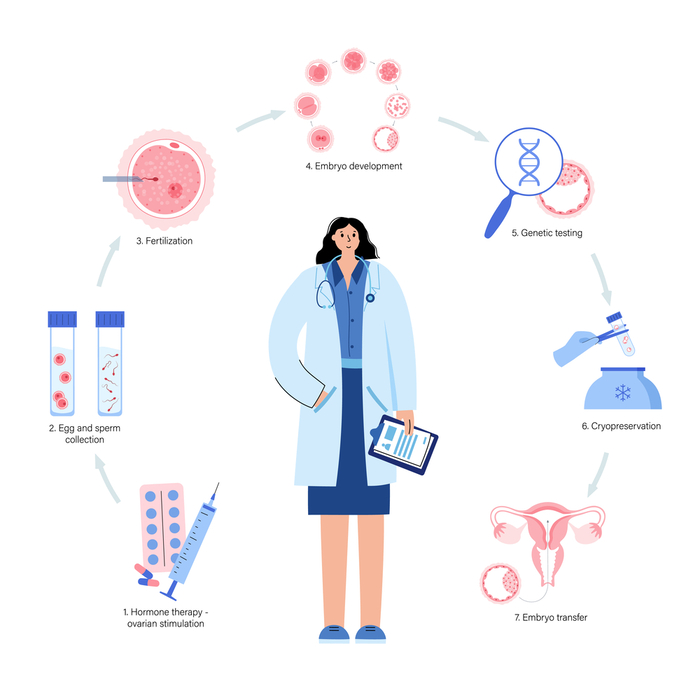
The first weeks are often spent on consultations, blood tests, ultrasound scans, and creating a treatment plan that matches your individual situation. Once medication starts, your ovaries need time to respond before eggs can be collected. After that comes fertilization, embryo development, and finally the transfer itself. If your clinic recommends freezing embryos before transfer, the timeline becomes a little longer because the embryo is transferred during a later cycle rather than immediately after egg retrieval. Every stage has its own purpose, even if waiting can sometimes feel like the hardest part. (Source: NHS)
One Cycle Does Not Tell the Whole Story
It is completely understandable to hope that the first IVF cycle will be the only one you need. For some couples, that is exactly what happens. For others, the journey is a little longer.
A first cycle gives your fertility team valuable information about how your body responds to medication, how the eggs fertilize, and how the embryos develop. That information can sometimes help guide future treatment if another cycle is needed. (HFEA)
Although it can be disappointing when pregnancy does not happen straight away, it does not automatically mean IVF has failed. Sometimes it simply means the next step needs to be adjusted.
Avoid Measuring Your Journey Against Someone Else's
It is easy to compare your experience with stories shared online or by friends. One person may announce a pregnancy after their first transfer, while another may describe years of treatment before reaching the same goal. Neither story predicts what will happen in your own case.
Age, embryo quality, sperm health, the cause of infertility, and overall reproductive health all influence the chances of success. This is why fertility specialists focus on creating a treatment plan based on the individual rather than comparing patients with one another. (Source: Mayo Clinic)
Looking at One Step at a Time
Trying to predict exactly when pregnancy will happen can quickly become overwhelming. Instead of focusing on the finish line, it often helps to concentrate on the next step in front of you.
Each appointment, scan, and treatment stage moves the process forward, even if progress sometimes feels slower than you had hoped.
IVF is not the same journey for everyone, and there is no single timeline that guarantees success. While waiting can be one of the most challenging parts of treatment, every stage plays an important role in giving you the best possible chance of achieving a healthy pregnancy.
Sources:
NHS - https://www.nhs.uk/tests-and-treatments/ivf/
HFEA - https://www.hfea.gov.uk/treatments/explore-all-treatments/in-vitro-ferti... Mayo Clinic - https://www.mayoclinic.org/tests-procedures/in-vitro-fertilization/about...